Applications of Sand Blasting Cabinets in Automotive, Aerospace, and Foundry Industries
From automotive component cleaning to aerospace surface finishing and foundry casting preparation, the sand blasting cabinet helps remove rust, oxidation, scale, burrs, old coatings, and process contaminants in a controlled environment. Unlike open blasting, cabinet blasting provides better abrasive containment, improved operator visibility, safer handling of parts, and more consistent finishing for repeat industrial applications.
Surface preparation is one of the most important processes in modern manufacturing. Before painting, powder coating, plating, bonding, welding, inspection, assembly, or final finishing, components often need to be cleaned thoroughly and prepared to a consistent surface standard. In industries where precision, durability, and production efficiency matter, sand blasting cabinets play a critical role in achieving that result.
For more info about the wet blasting machine, visit our webpage.
However, the way a sand blasting cabinet is used can vary significantly from one industry to another. The blasting requirements of an automotive workshop are not the same as those of an aerospace manufacturer or a foundry handling rough castings. Material type, contamination level, dimensional sensitivity, production volume, and finish quality expectations all influence how blasting cabinets are selected and used.
Why Sand Blasting Cabinets Matter in Industrial Manufacturing
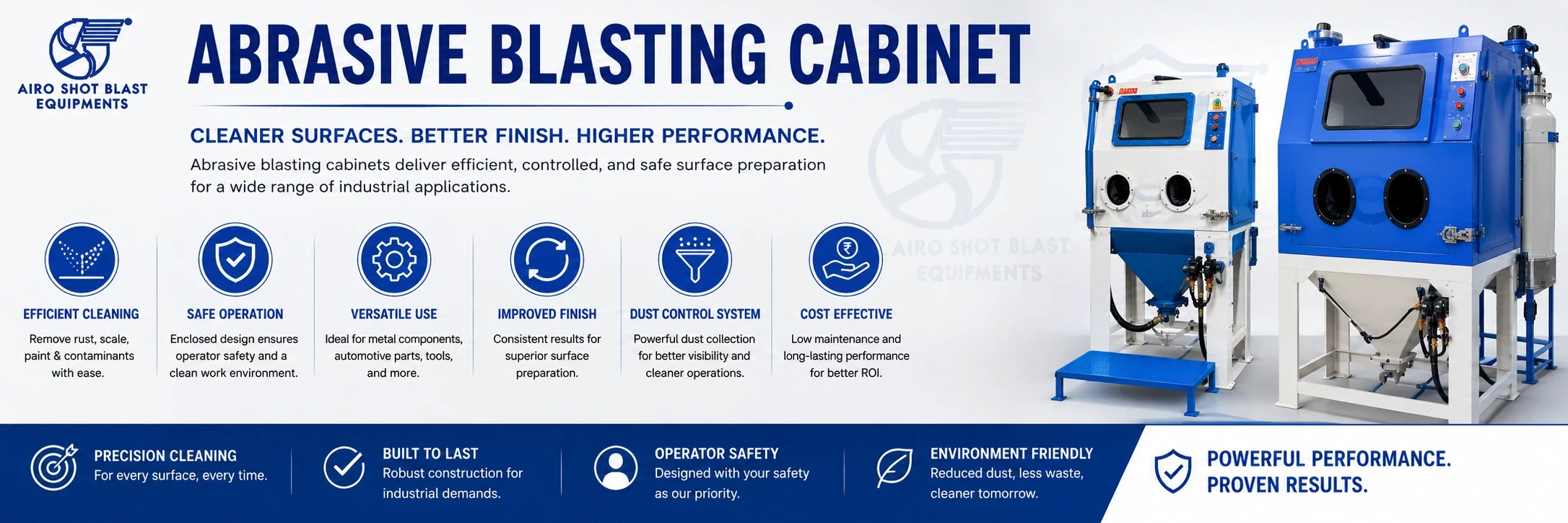
A sand blasting cabinet is an enclosed abrasive blasting cabinet system designed to clean, strip, smooth, roughen, or prepare surfaces by directing abrasive media at controlled pressure inside a sealed cabinet. The operator can work safely through hand gloves and viewing windows while the abrasive media remains contained inside the system. This allows for better abrasive media recovery, reduced mess, improved process control, and more consistent surface treatment.
In industrial environments, cabinet blasting is used for tasks such as:
- Rust and corrosion removal
- Paint and coating stripping
- Surface preparation before painting or powder coating
- Deburring of machined or fabricated parts
- Cleaning castings and forgings
- Oxide and contamination removal
- Matte finishing and cosmetic improvement
- Preparation for bonding, plating, or inspection
Because these needs exist across multiple sectors, sand blasting cabinets have become a standard part of manufacturing, refurbishment, maintenance, and finishing operations.
Sand Blasting Cabinets in the Automotive Industry
The automotive industry depends heavily on clean, properly prepared surfaces. Whether the application involves engine parts, suspension components, gear housings, brake parts, fabricated assemblies, or restoration work, blasting cabinets help remove contamination and create a surface ready for finishing or reuse.
Common Automotive Applications of Sand Blasting Cabinets
Cleaning Engine and Transmission Components
Automotive workshops and component manufacturers often use blasting cabinets to clean engine blocks, cylinder heads, intake manifolds, transmission housings, brackets, and covers. Over time, these parts accumulate carbon deposits, oxidation, oil residue, paint, and surface corrosion. A blasting cabinet helps remove these contaminants while improving the appearance and usability of the part.
Surface Preparation Before Coating
Many automotive parts are powder-coated, painted, or plated after fabrication or repair. For coatings to adhere properly, the surface must be clean and uniformly prepared. Blasting cabinets are commonly used to remove rust, mill scale, old paint, and contamination before the finishing stage.
For more info about the granite engraving machine, visit our webpage.
Restoration of Automotive Parts
In restoration workshops, cabinet blasting is widely used for classic car parts, motorcycle components, wheel rims, metal trim, brackets, and mechanical hardware. The enclosed blasting process allows precise cleaning without the overspray and mess associated with open blasting.
Deburring and Finishing Small Components
Automotive suppliers often process brackets, clamps, machined parts, and fabricated metal components that require deburring or light surface texturing. Cabinet blasting provides a practical solution for cleaning edges and improving finish consistency before assembly.
Why Automotive Manufacturers Use Sand Blasting Cabinets
Automotive applications usually involve high part variety, repeated cleaning cycles, and the need for visually clean, coating-ready surfaces. Sand blasting cabinets are valuable because they allow controlled blasting of smaller to medium-sized components without exposing the workshop to excessive dust or abrasive spread.
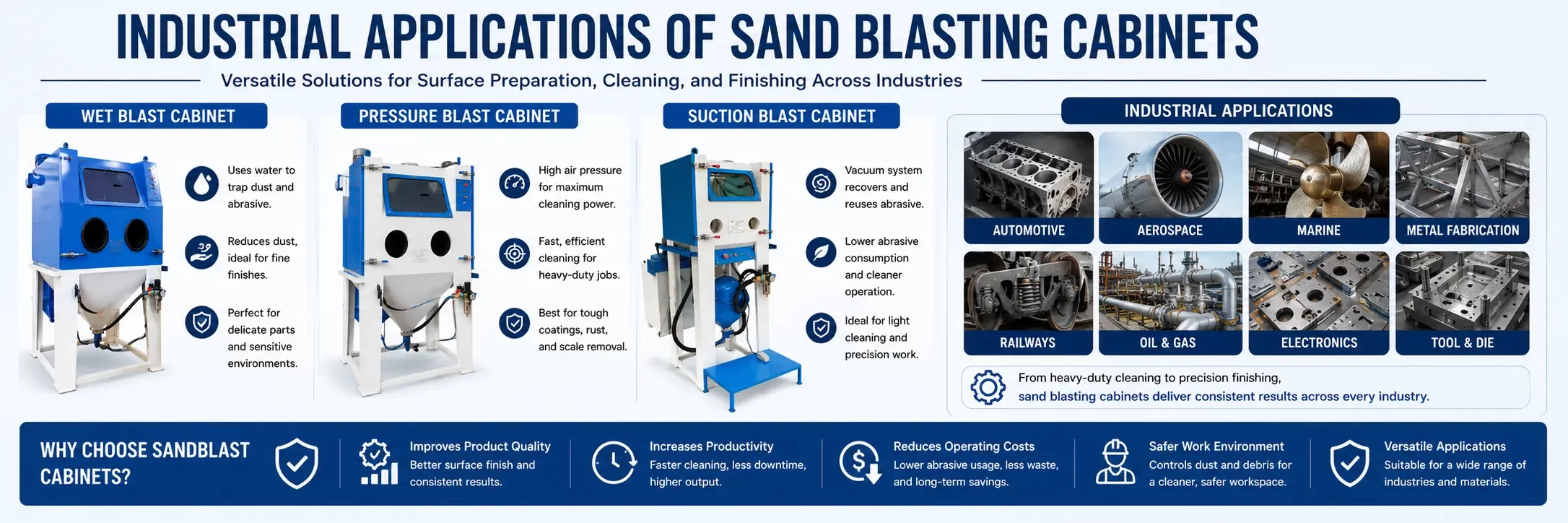
Best cabinet types for automotive work
- Suction blasting cabinets for general workshop cleaning and restoration
- Pressure cabinets for faster rust removal and production blasting
- Wet blasting cabinets for delicate aluminium parts and cosmetic finishing
- Bench top cabinets for compact components and tool-room work
Key Automotive Requirements
The automotive industry often prioritizes:
- Good finish quality
- Controlled cleaning of reusable parts
- Fast turnaround for production and repair
- Flexibility for different part sizes
- Reliable abrasive recovery and dust collection
Sand Blasting Cabinets in the Aerospace Industry
The aerospace industry places far greater emphasis on precision, material integrity, process control, and surface consistency. Components used in aircraft, turbines, aerospace tooling, and support systems often involve aluminium alloys, stainless steel, titanium, specialty metals, and tightly controlled engineering surfaces. Because of this, blasting in aerospace environments must be much more selective than in general fabrication.
Common Aerospace Applications of Sand Blasting Cabinets
1) Surface Cleaning of Precision Components
Aerospace manufacturers use blasting cabinets to clean precision parts without introducing excessive surface damage. Components such as brackets, housings, fastener assemblies, and machined parts may require removal of oxidation, light contamination, or previous surface residues before further processing.
2) Preparation Before Coating, Bonding, or Inspection
Many aerospace parts undergo painting, coating, bonding, or non-destructive testing. For these downstream processes to be reliable, the part surface must be free of contamination and uniformly prepared. Blasting cabinets help create a clean and repeatable surface condition.
3) Mold, Tool, and Fixture Cleaning
Aerospace production often relies on specialized tooling, molds, and fixtures that must be maintained carefully. Cabinet blasting can be used to clean these items without aggressive damage, especially when a fine media and controlled pressure setting are used.
4) Cosmetic and Functional Finishing
Certain aerospace parts require a consistent matte finish or surface texture. Wet blasting and glass bead blasting are commonly preferred where the goal is cleaning and refinement rather than heavy material removal.
Why Aerospace Applications Require More Control
Unlike heavy industrial fabrication, aerospace blasting is often less about aggressive rust removal and more about controlled surface treatment. Components may be lightweight, thin-walled, expensive, or made from sensitive alloys. Excessive blasting pressure, the wrong abrasive, or poor process control can affect dimensional accuracy or surface quality.
Best cabinet types for aerospace work
- Wet blasting cabinets for low-dust, controlled finishing
- Fine-media suction cabinets for precision cleaning
- Specialized pressure cabinets for selected heavy-duty applications
- Custom cabinets with better visibility, filtration, and work support fixtures
Key Aerospace Requirements
Aerospace blasting operations typically focus on:
- Precise and repeatable finishing
- Minimal surface damage
- Clean surfaces for coating or inspection
- Excellent visibility inside the cabinet
- Tight process control over abrasive type and pressure
Sand Blasting Cabinets in the Foundry Industry
Foundry applications are very different from automotive and aerospace work. Foundries deal with castings, sand residues, scale, flash, oxidation, and rough surface conditions that often require more aggressive cleaning. In this environment, blasting cabinets are used to prepare cast components for machining, finishing, inspection, painting, or dispatch.
Common Foundry Applications of Sand Blasting Cabinets
Cleaning Castings After Production
After casting, components may carry adhered sand, oxide layers, discoloration, or rough residues that need to be removed. Cabinet blasting helps clean the casting surface and reveal the true condition of the part.
Removing Flash, Scale, and Surface Contamination
Foundry parts often require the removal of flash, scale, and process contamination before they move to the next production stage. A blasting cabinet can improve the appearance of cast parts and make them easier to inspect or machine.
Surface Preparation Before Machining or Coating
Clean castings are easier to process in downstream operations. Foundries and metalworking units often blast cast parts before machining, painting, powder coating, or dispatching to the customer.
Finishing of Small to Medium Cast Components
Not all foundry parts are large enough for a sand blasting room or tumble blast system. Small and medium castings can often be processed efficiently inside a cabinet, especially when the foundry wants more controlled manual blasting.
Why Foundry Operations Need Heavy-Duty Sand Blasting Cabinet Performance
Foundry castings can be rough, irregular, and heavily contaminated compared to many automotive or aerospace parts. As a result, the blasting equipment must usually deliver stronger cleaning action and withstand more abrasive wear.
Best sand blasting cabinet types for foundry work
- Pressure blasting cabinets for aggressive cleaning
- Large sand blasting cabinets for medium castings and fabricated foundry parts
- Heavy-duty abrasive recovery systems for repeated industrial use
- Cabinets designed for metallic or sharp-cutting abrasives such as steel grit or aluminium oxide
Key Foundry Requirements
Foundry blasting operations often prioritize:
- High cleaning power
- Durability of cabinet construction
- Ability to handle rough cast surfaces
- Fast blasting cycles for repetitive parts
- Effective dust collection for heavy contamination loads
A Comprehensive Comparison: Automotive vs Aerospace vs Foundry Applications
Although all three industries use sand blasting cabinets for cleaning and surface preparation, their priorities are very different. Understanding these differences helps buyers choose the right cabinet sand blasting machine rather than assuming one cabinet will suit every production environment.
Surface Condition and Contamination Level
- Automotive: Automotive parts may have rust, oil residue, paint, oxidation, or moderate contamination. The cleaning need is often practical and production-focused.
- Aerospace: Aerospace parts usually require controlled cleaning of light contamination, oxidation, or residues without damaging the component.
- Foundry: Foundry castings often carry heavy scale, adhered sand, flash, and rough surface contamination that demands stronger blasting action.
Material Sensitivity
- Automotive: Automotive work can involve steel, cast iron, aluminium, and fabricated components, so blasting requirements vary by part type.
- Aerospace: Aerospace components are often made from high-value, lightweight, or sensitive materials that require careful abrasive selection and lower blasting aggression.
- Foundry: Foundry parts are usually more robust than aerospace components and often need aggressive cleaning rather than delicate finishing.
Blasting Intensity
- Automotive: Ranges from light restoration blasting to moderate industrial cleaning.
- Aerospace: Usually controlled, precision-oriented blasting with a focus on surface integrity.
- Foundry: Frequently heavy-duty blasting with high cleaning intensity and stronger media.
Preferred Cabinet Configuration
- Automotive: Automotive operations may use suction, pressure, or wet cabinets depending on whether the job involves restoration, production cleaning, or delicate aluminium finishing.
- Aerospace: Wet blasting cabinets, fine-media systems, and precision-focused custom cabinets are often more suitable.
- Foundry: Pressure blasting cabinets and heavy-duty industrial blasting cabinets are typically the strongest fit due to the rough nature of the work.
Finish Quality Expectations
- Automotive: Often needs a clean, coating-ready, visually acceptable finish.
- Aerospace: Requires highly controlled and consistent surface quality, especially before coating, bonding, or inspection.
- Foundry: Usually focuses first on cleaning efficiency and surface preparation, although finish quality still matters for downstream machining and coating.
Choosing the Right Sand Blasting Cabinet for Each Industry
When selecting a blasting cabinet for automotive, aerospace, or foundry use, businesses should evaluate more than just the cabinet dimensions or machine price. The correct choice depends on how the machine will actually be used in the production process.
Important selection factors include:
- Type of workpiece and material
- Surface contamination level
- Required finish quality
- Production volume and daily usage
- Abrasive media compatibility
- Dust collection and visibility needs
- Cabinet size and loading convenience
- Suction vs pressure blasting requirement
- Scope for future expansion or customization
For example, an automotive workshop restoring parts may prioritize flexibility and finish control, while a foundry may focus on blasting speed and cabinet durability. An aerospace facility may place the highest value on precision, visibility, and minimal surface damage.
Why Sand Blasting Cabinet Matters for Global Manufacturing
Manufacturers, exporters, job-work units, fabrication plants, and maintenance facilities increasingly need blasting systems that are tailored to specific applications rather than generic “one-size-fits-all” machines. As industries demand better productivity, repeatable quality, and cleaner finishing standards, the role of sand blasting cabinets continues to expand.
A supplier or manufacturer that understands the differences between automotive, aerospace, and foundry applications can recommend the right cabinet type, abrasive system, dust collector arrangement, and level of customization. That leads to better performance, lower operating cost, and more reliable long-term results.
Sand blasting cabinets are used across automotive, aerospace, and foundry industries for one common reason: they provide a controlled and efficient way to clean, prepare, and finish industrial components. Yet the way these cabinets are applied varies significantly between sectors. Automotive applications often focus on restoration, coating preparation, and production cleaning. Aerospace applications demand precision, surface integrity, and controlled finishing. Foundry operations require stronger cleaning performance, rugged construction, and the ability to handle rough cast surfaces and heavy contamination.
There is no single blasting cabinet that is “best” for every industry. The right solution depends on the workpiece material, contamination level, finish requirement, production volume, and abrasive media used in the process. By understanding these differences, manufacturers can choose a blasting cabinet that not only cleans parts effectively but also supports long-term productivity, quality control, and operational efficiency in their specific industrial environment.