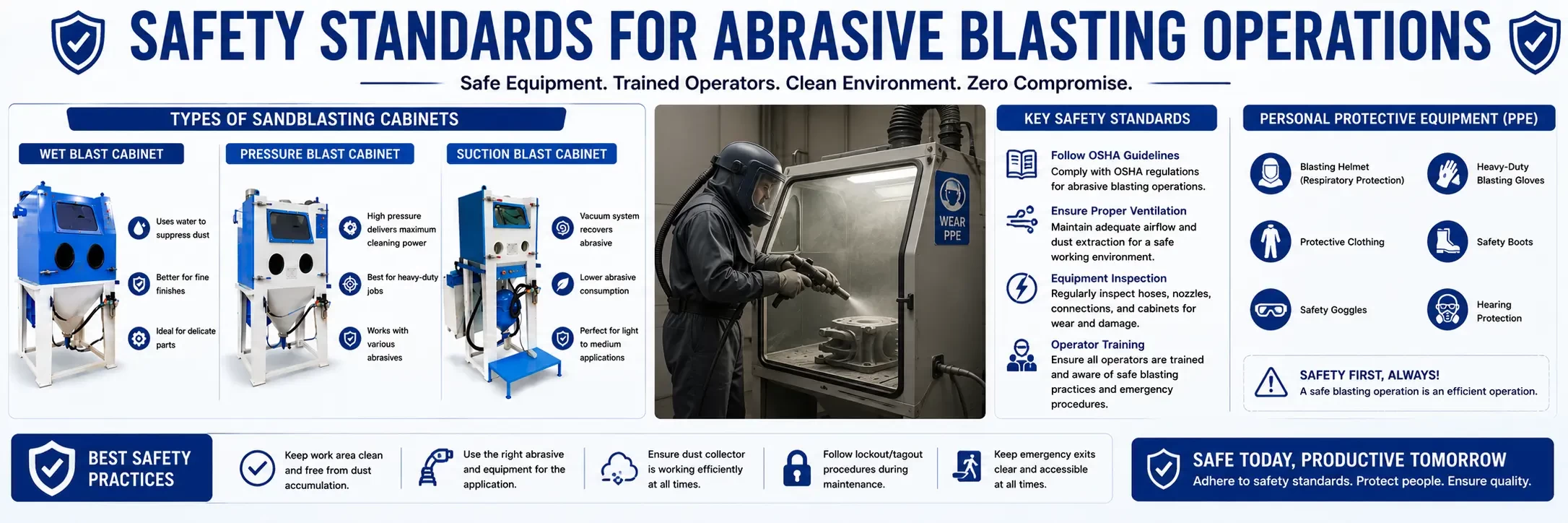
Surface preparation is one of the most important processes in modern manufacturing, construction, fabrication, automotive, aerospace, and maintenance industries. Properly prepared surfaces improve coating adhesion, increase product durability, and enhance overall finish quality. A Sand Blasting Machine is widely recognized as one of the most efficient methods for cleaning, smoothing, and preparing surfaces before painting, powder coating, welding, or other finishing operations.
By using high-velocity abrasive media, sand blasting technology effectively removes rust, paint, corrosion, scale, and contaminants from various materials. Its versatility and efficiency make it an essential solution for industries requiring high-quality surface treatment and preparation.
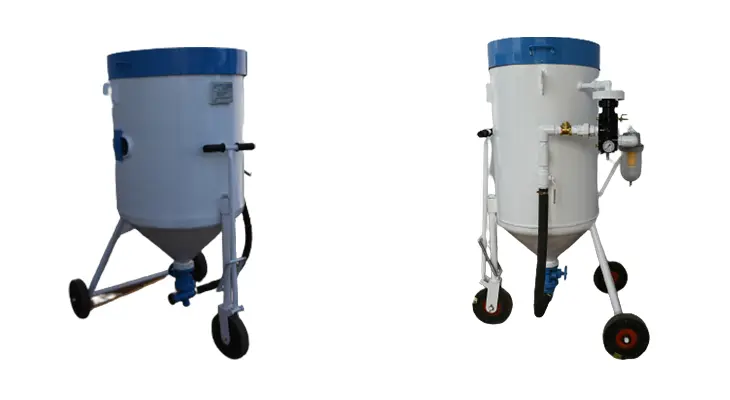
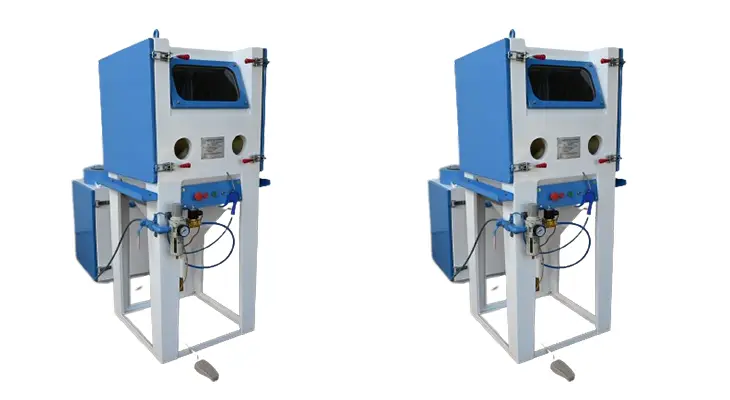
A sand blasting machine is a machine that uses abrasive materials with air pressure to clean or prepare surfaces for painting or other Zinc coatings. A sand blasting machine can also be utilized for the destruction of sand. It is also utilized to remove contaminated substances from metal products, which have been cast or produced forged, and in some cases have been welded. A sand blasting machine is also called an abrasive blasting machine.
The media is set in a tank, and air pressure is kept at the same pressure as the operative will do sandblasting. The media is deposited by gravity into a blast pipeline, which forces this out of the blasting nozzle, which is the pressure of the air we use.
Understanding the Sand Blasting Process
Sand blasting is a mechanical cleaning method that propels garnet sand abrasive media at high speed onto a target surface. The abrasive impact removes unwanted materials and creates a clean, textured surface suitable for additional processing.
The process is commonly used for:
- Rust removal
- Paint stripping
- Surface cleaning
- Deburring
- Surface roughening
- Coating preparation
- Metal restoration
Modern blasting systems are designed to improve productivity while maintaining operator safety and environmental compliance.
Working of Sand Blasting Machines
For effective sandblasting work, Sandblasting Machines has become mandatory to know about the sandblasting machine’s equipment and its operation processes. If you are an owner of a company or your job profile is related to sandblasting work, you must read this article. In this article, we are going to cover almost all the details related to sandblasting machine equipment and its work processes. But before we describe it, let me also tell you something more about it.
Sandblasting is the process of forcibly propelling a stream of abrasive substance (material) against a surface under high pressure to smooth a rough surface, roughen a smooth surface, and shape a surface or to remove surface contaminants. There are several variants of its process, such as bead blasting, sandblasting, shot blasting machine, and soda blasting, etc.
Importance of Surface Preparation in Industry
The quality of a finished product often depends on the condition of its surface before coating or assembly. Poorly prepared surfaces can result in coating failures, corrosion, reduced product life, and costly maintenance issues.
Proper blasting helps industries achieve:
- Improved coating adhesion
- Enhanced corrosion resistance
- Uniform surface texture
- Increased product lifespan
- Better appearance and quality
As industrial standards continue to evolve, efficient surface preparation methods have become increasingly important across manufacturing sectors.
Benefits of Advanced Sand Blasting Equipment
Modern sand blasting equipment is designed to provide maximum efficiency, consistent performance, and reliable operation. These systems are available in various configurations to suit different industrial requirements. Key benefits include:
- High Cleaning Efficiency: Blasting systems quickly remove contaminants and prepare surfaces in less time compared to manual cleaning methods.
- Consistent Results: Advanced controls ensure uniform surface treatment across different materials and component sizes.
- Cost Savings: Faster processing speeds and reusable abrasive media help reduce operational expenses.
- Versatility: The equipment can be used on steel, aluminum, cast iron, concrete, stone, and many other materials.
- Enhanced Productivity: Industrial sand blasting machine systems allow manufacturers to process larger volumes of components with minimal downtime.
Uses of Sand Blasting Machine
Sand blasting technology is widely used in numerous industrial sectors.
- Manufacturing Industry: Manufacturers use blasting systems to prepare components before painting, coating, welding, or assembly.
- Automotive Sector: Vehicle restoration, engine rebuilding, wheel refinishing, and chassis preparation frequently require abrasive blasting.
- Construction Industry: Steel structures, bridges, pipelines, and storage tanks undergo blasting before protective coatings are applied.
- Aerospace Industry: Aircraft components require precise cleaning and surface preparation to meet strict quality standards.
- Marine and Shipbuilding: Blasting removes corrosion, marine growth, and old coatings from ships and offshore structures.
Advantages of an Industrial Sand Blasting Machine
A high-capacity industrial sand blasting machine is specifically designed for demanding production environments where large-scale surface preparation is required. Major advantages include:
- Continuous operation capability.
- Faster production cycles.
- Improved cleaning performance.
- Reduced labor requirements.
- Greater abrasive efficiency.
Industrial systems are commonly used in fabrication plants, foundries, heavy engineering workshops, and infrastructure projects.
Why Choose a Sand Blasting Machine with Compressor
Many businesses prefer a sand blasting machine with compressor because it provides a complete and convenient blasting solution. The sand blasting air compressor generates the compressed air required to propel abrasive media at high velocity.
Benefits include:
- Easy installation.
- Consistent air supply.
- Improved blasting efficiency.
- Reduced setup complexity.
- Enhanced portability for field applications.
Integrated systems simplify operations and ensure reliable blasting performance across different projects.
Growing Demand for Automatic Sandblasting Machine Technology
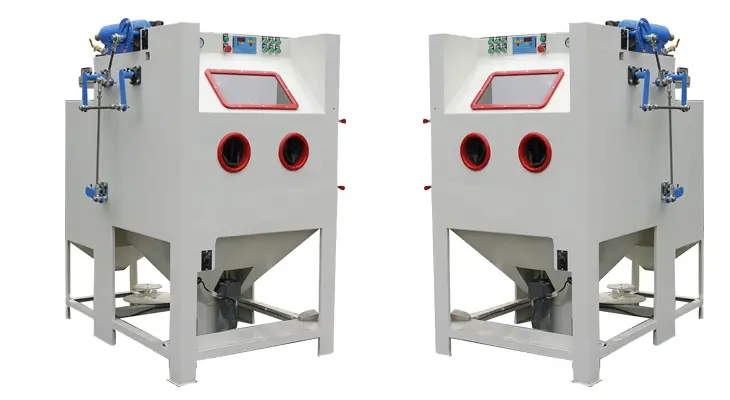
Automation is transforming industrial manufacturing processes, and blasting operations are no exception. An automatic sandblasting machine helps businesses improve productivity while reducing manual intervention. Advantages of automated systems include:
- Consistent Quality: Automation ensures uniform blasting results regardless of production volume.
- Higher Productivity: Automated equipment can process components continuously with minimal operator involvement.
- Reduced Labor Costs: Fewer manual operations result in improved efficiency and lower workforce requirements.
- Enhanced Safety: Operators have less direct exposure to abrasive media and dust.
As industries adopt smart manufacturing practices, automatic sand blasting machine solutions continue to gain popularity worldwide.
Factors Influencing Surface Preparation Performance
Several factors affect blasting efficiency and final surface quality.
- Abrasive Type: Different materials require specific abrasive media to achieve optimal results.
- Air Pressure: Proper pressure settings ensure effective cleaning without damaging the substrate.
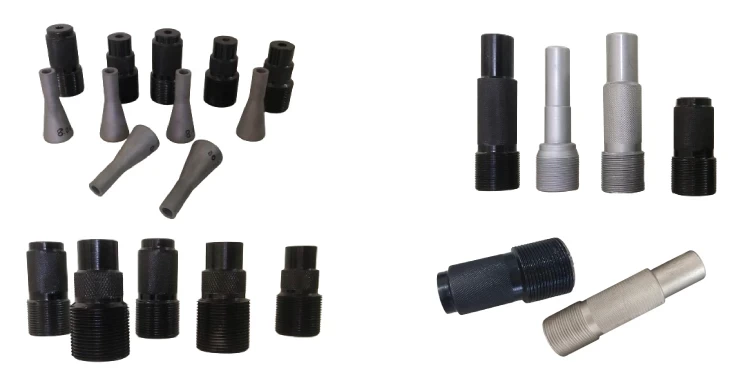
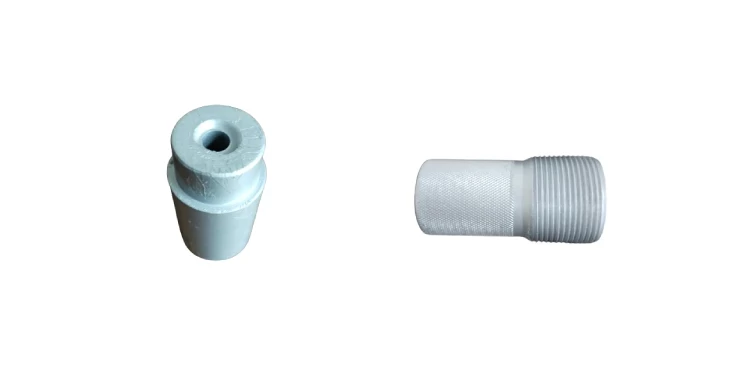
- Sand Blasting Nozzle Selection: Sand blasting nozzle size and design influence abrasive velocity and blasting coverage.
- Surface Condition: Heavily corroded or coated surfaces may require more aggressive blasting parameters.
- Operator Experience: Proper machine operation contributes significantly to achieving consistent results.
Understanding these factors helps maximize blasting performance and productivity.
Different Types of Methods of Sand Blasting Machine
While sand used to be the primary abrasive media in the past, now there are substantial other abrasives that do the cleansing. The media we select influences the final result. The media comprises the different types of sand blasting methods listed below:
Silica Sand: Silica sand, also known as silicon dioxide, is ordinary sand that is commonly used for shearing or scraping a surface. It is called silica or quartz, which was commonly used to remove surface impurities and give it a clean look because it consists of sharp edges, which give it a grit effect in abrasive blasting. But since it could lead to common respiratory problems or asthma, silica sand is no longer
The primary choice in sand blasting applications.
Soda Sand blasting: Soda sandblasting gives a cleansing effect without damaging the layer because it doesn’t damage the outer layer of softer metals like aluminous or react chemically with its surface. Therefore, it is extensively used to remove rust from metals without causing depression or damage to the underlying delicate layers, since tougher materials can simply get scraped by hard media. Soda is also a great grit to use on delicate materials.
Steel Sandblasting: Steel media is used for both blasting and scraping. In this process, steel grit is used as an abrasive medium to clean off corrosion and rust from hard metal surfaces. It has a fast cutting effect, which can be effective in thick surface preparation prior to painting. Steel balls are best used for peening purposes on different materials, and they are common in automobile industries, aeroplane hangars, and heavy machinery. Steel media is used as it also leaves a smooth finish. It has a high recyclable life.
Glass Beads: Glass beads are silica-free and environmentally safe. They can be used on many areas to remove surface imperfections like rust, burrs, scales, and more. It is excellent for paint preparation and provides a unique matte and satin finish to the surface. This media offers a clean finish on a variety of metals, and softer metals like aluminum can be effectively treated using glass beads.
Bristle blasting: Steel bristles are hard, round metal washes containing bristles at their edges. This brush-like blast is rotated on a surface to remove harsh impurities, subsequently providing it with a smooth surface. This technique is only used on harsh surfaces to clean difficult corrosion or burrs
Choosing a Reliable Sand Blasting Machine Manufacturer
Selecting an experienced sand blasting machine manufacturer is essential for obtaining durable, high-performance equipment. Important considerations include:
- Industry expertise.
- Product quality standards.
- Engineering capabilities.
- Customization options.
- Technical support services.
- Availability of replacement components.
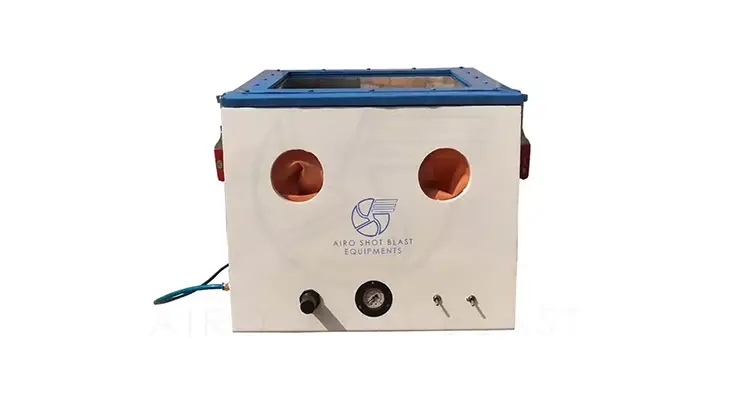
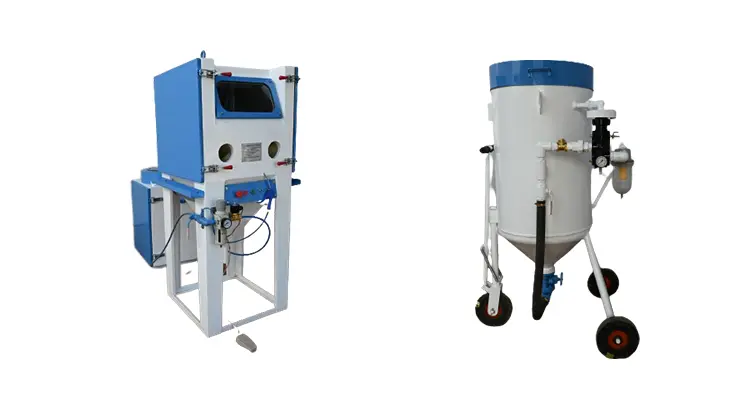
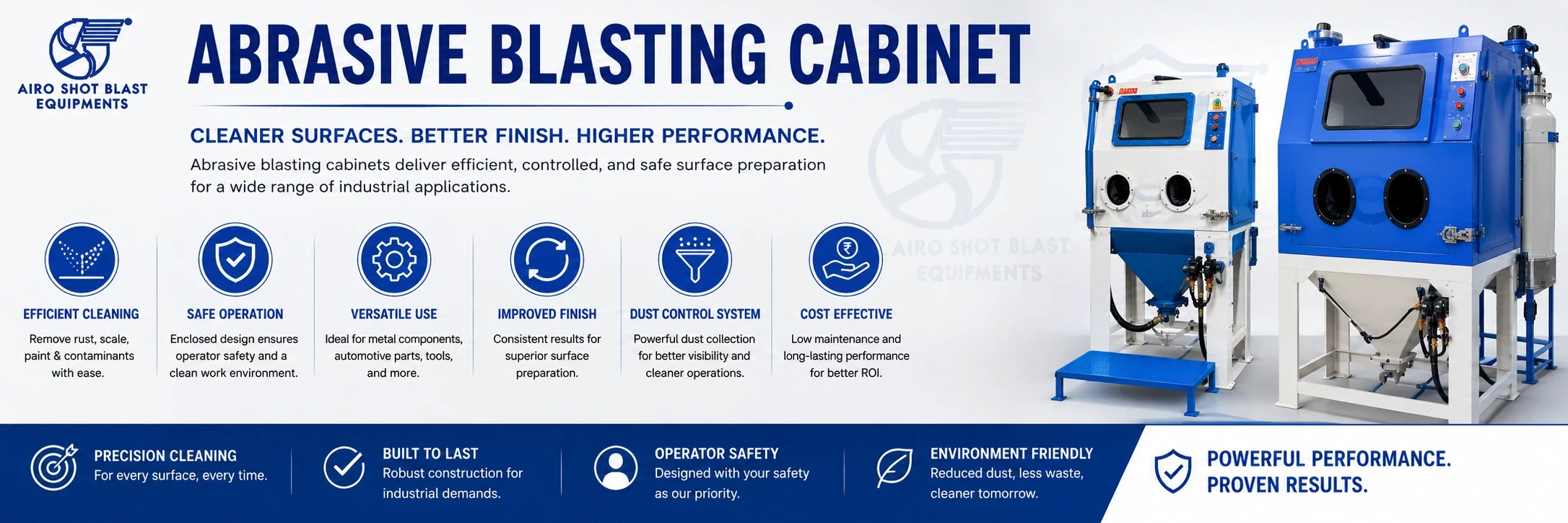
A reputable manufacturer can recommend the most suitable blasting solution based on production requirements and application needs. We are manufacturers and suppliers of sand blasting machines, shot blasting machines, Grit Blasting Machine, Sand blasting Cabinet, shot blasting cabinet, grit blasting cabinet, suction sand blaster, wet blasting machine, wet blasting cabinet, large sand blasting cabinet, automatic sand blasting cabinet, pressure blasting cabinet, sand blasting room worldwide.
Working with a Trusted Sand Blasting Machine Supplier
A dependable sand blasting machine supplier provides more than just equipment. The right supplier supports customers throughout the equipment lifecycle. Key services often include:
- Equipment consultation.
- Installation assistance.
- Operator training.
- Maintenance support.
- Sand blasting spare parts supply.
- Technical troubleshooting.
Partnering with an experienced supplier helps businesses maintain productivity and reduce downtime.
Understanding Sand Blasting Machine Price
Several factors influence the overall Sand Blasting Machine Price in the market.
- Machine Capacity: Higher-capacity systems generally require larger investments.
- Automation Features: Automated systems typically cost more due to advanced technology and controls.
- Build Quality: Premium materials and heavy-duty construction improve durability and affect pricing.
- Dust Collection Systems: Advanced filtration and environmental control systems add value to the equipment.
- Customization Requirements: Specialized applications may require custom-designed solutions that impact overall cost.
Businesses should evaluate total ownership value rather than focusing solely on the initial purchase price.
Market Growth of Sand Blasting Machine in India
The demand for sand blasting machine in India continues to grow as manufacturing, infrastructure, automotive, aerospace, and engineering sectors expand rapidly. Indian industries increasingly invest in advanced blasting technologies to improve efficiency, product quality, and international competitiveness.
Modern equipment manufacturers offer customized blasting solutions that meet global quality standards while remaining cost-effective for domestic and export markets. This growth has positioned India as an important hub for abrasive blasting technology and equipment manufacturing.