Pressure vs Suction Blast Cabinets: Which Abrasive Blasting System is Right for Your Application?
When selecting an abrasive blasting cabinet, one of the most common questions manufacturers, fabricators, and workshop owners ask is whether to choose a Pressure vs Suction Blast Cabinets setup. Both technologies are widely used for surface preparation, rust removal, paint stripping, deburring, cleaning, and finishing applications. However, they operate differently and offer distinct advantages depending on production requirements, budget, and desired blasting performance.
Understanding the differences between pressure and suction blasting cabinets can help businesses make an informed investment decision while improving productivity, efficiency, and surface quality.
Understanding Blast Cabinet Technology
Blast cabinets are enclosed systems designed to contain abrasive blasting operations within a controlled environment. They allow operators to clean and prepare components while minimizing dust exposure, abrasive waste, and environmental contamination.
The primary difference between cabinet types lies in how abrasive media is delivered to the sand blasting nozzle. This distinction directly affects cleaning speed, abrasive consumption, operating costs, and overall productivity.
Before comparing the two systems, it is important to understand how each technology works.
What is a Pressure Blast Cabinet?
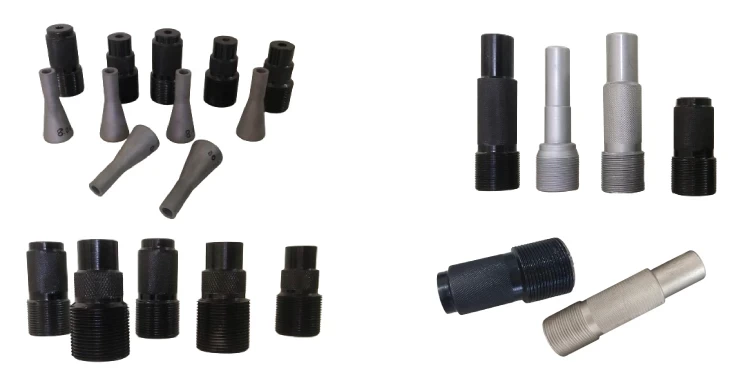
A pressure blast cabinet uses a pressurized vessel to force abrasive media directly toward the blast nozzle. Compressed air enters the pressure pot, creating pressure that pushes the abrasive through a sand blasting hose and out of the sand blasting nozzle at high velocity.
Because the abrasive is delivered under pressure, the system produces a stronger blasting force and significantly faster cleaning rates.
Pressure cabinets are commonly used in industries where high production output and aggressive cleaning performance are required.
How Pressure Systems Work
The blasting process begins when abrasive media is loaded into a pressure vessel. Compressed air pressurizes the vessel, forcing the media toward the blast nozzle.
As the abrasive exits the sand blasting nozzle, it impacts the workpiece surface with greater force than most alternative blasting methods. This results in faster removal of rust, scale, coatings, and contaminants.
Advantages of a Pressure Blast Cabinet
Pressure systems offer several performance benefits.
- Faster Cleaning Speed: The increased abrasive velocity allows operators to complete blasting jobs more quickly.
- Higher Productivity: Production facilities can process more components within the same timeframe.
- Better Performance on Heavy Contamination: Pressure blasting excels at removing thick rust, heavy scale, old coatings, and stubborn contaminants.
- Improved Surface Profiling: The stronger abrasive impact creates more consistent surface profiles for coating applications.
- Greater Efficiency: Operators spend less time blasting each component, improving overall workflow.
What is a Suction Blast Cabinet?
A suction blast cabinet operates using a siphon principle. Compressed air passes through the blast gun and creates a vacuum that draws abrasive media from a sand blasting hopper or storage reservoir.
The abrasive mixes with the airflow and is projected toward the workpiece surface.
This design is simpler than pressure blasting systems and is widely used for general-purpose cleaning and finishing applications.
How Suction Systems Work
Compressed air enters the blast gun and creates negative pressure. The resulting vacuum pulls abrasive media through a pickup tube into the airflow stream.
The abrasive then exits the nozzle and impacts the workpiece surface.
Although effective for many applications, suction systems generally produce lower abrasive velocity than pressure systems.
Advantages of a Suction Blast Cabinet
Suction blasting remains a popular choice for many businesses due to its simplicity and affordability.
- Lower Initial Investment: Suction sandblaster cabinets typically cost less than pressure blasting systems.
- Easier Maintenance: The simpler design reduces maintenance requirements and operating complexity.
- Lower Abrasive Consumption: For light-duty applications, abrasive usage can be more economical.
- Ideal for Precision Work: Gentler blasting action makes suction systems suitable for delicate components and finishing tasks.
- User-Friendly Operation: New operators often find suction systems easier to learn and operate.
Pressure vs Suction: Key Performance Differences
While both systems perform abrasive blasting, their performance characteristics vary considerably.
Cleaning Speed
- Pressure blasting systems generally clean surfaces much faster because abrasive media exits the nozzle at a higher velocity.
- Suction systems provide slower cleaning rates but may be sufficient for smaller workloads and less demanding applications.
Surface Preparation Efficiency
- Pressure cabinets create deeper and more consistent surface profiles, making them ideal for industrial coating preparation.
- Suction cabinets are often preferred for lighter cleaning and cosmetic finishing work.
Production Capacity
- High-volume manufacturing facilities usually benefit from pressure systems due to their increased throughput.
- Workshops handling occasional blasting tasks may find suction systems more practical.
Equipment Complexity
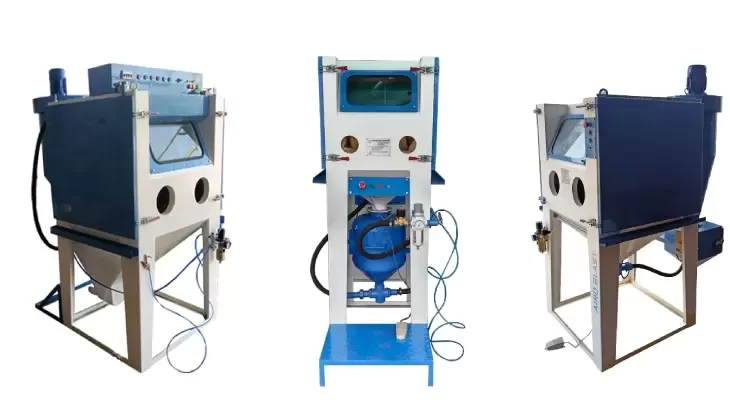
- Pressure systems involve additional components such as pressure vessels, regulators, and control valves.
- Suction systems use fewer parts, resulting in simpler operation and maintenance.
Operating Costs
- Pressure systems may require a higher initial investment but often deliver better long-term productivity for industrial operations.
- Suction systems offer lower acquisition costs and are economical for smaller-scale applications.
Applications of Pressure Blast Cabinets
Pressure blasting technology is commonly used in industries requiring aggressive cleaning performance.
- Heavy Equipment Manufacturing: Large machinery components often require extensive surface preparation before painting or coating.
- Steel Fabrication: Structural steel, fabricated assemblies, and welded components benefit from pressure blasting efficiency.
- Shipbuilding and Marine Maintenance: Marine environments create severe corrosion that often requires aggressive abrasive blasting.
- Foundries: Castings with heavy scale and sand residues can be cleaned quickly using pressure systems.
- Industrial Maintenance: Pressure cabinets are frequently used to restore heavily contaminated components.
Applications of Suction Blast Cabinets
Suction systems remain valuable across many industries.
- Automotive Restoration: Engine parts, brackets, wheels, and small components can be cleaned effectively without excessive abrasive force.
- Precision Manufacturing: Delicate components often benefit from controlled blasting action.
- Jewelry and Decorative Finishing: Fine surface finishing applications require gentle abrasive treatment.
- Tool Maintenance: Cleaning and restoring tools is a common application for suction systems.
- Small Workshops: Businesses with lower blasting volumes often choose suction technology due to its affordability.
Factors to Consider Before Choosing a Sand Blasting Cabinet
Selecting the right sand blasting cabinet depends on several important considerations.
Production Requirements
- High-volume production environments typically benefit from pressure blasting efficiency.
- Lower-volume operations may achieve excellent results with suction systems.
Surface Condition
- Heavily corroded or coated surfaces usually require the increased power of pressure blasting.
- Lighter cleaning applications can often be handled effectively using suction systems.
Component Size
- Large workpieces may benefit from faster cleaning rates provided by pressure systems.
- Smaller components are frequently processed successfully using either technology.
Budget
- Initial equipment costs, operating expenses, and maintenance requirements should all be evaluated before making a purchasing decision.
Future Growth Plans
- Businesses expecting increased production demand may benefit from investing in higher-capacity pressure systems.
Dust Collection and Safety Considerations
Regardless of the blasting technology selected, effective dust collection remains essential.
Modern blast cabinets often include:
- Cartridge filtration systems
- Dust extraction units
- Abrasive recovery systems
- Safety interlocks
- Improved visibility features
Proper dust control improves operator safety, enhances visibility, and contributes to consistent blasting performance.
Many industries also follow internationally recognized surface preparation and safety standards established by organizations such as ISO, AMPP, OSHA, and NIOSH.
Which Sand Blasting Cabinet Delivers Better Return on Investment?
The answer depends on operational requirements.
Pressure systems often generate better returns for businesses that:
- Process large volumes of components.
- Require rapid cleaning performance.
- Handle heavily contaminated surfaces.
- Need consistent production output.
Suction systems often provide better value for businesses that:
- Operate on smaller budgets.
- Perform occasional blasting work.
- Focus on light cleaning and finishing.
- Require simpler maintenance procedures.
A detailed evaluation of production goals and operational needs is essential before selecting either system.
These innovations are helping manufacturers achieve higher productivity while reducing operating costs and environmental impact.
Choosing between pressure and suction blast cabinets is one of the most important decisions when investing in a cabinet-type abrasive blasting machine. Both technologies offer distinct advantages and are suitable for different applications. Pressure systems provide faster cleaning, higher productivity, and superior performance for demanding industrial tasks. Suction systems offer affordability, simplicity, and excellent results for lighter cleaning and finishing operations.
By carefully evaluating production requirements, surface conditions, budget considerations, and long-term business goals, companies can select the blasting solution that delivers the best performance, efficiency, and return on investment. Understanding the strengths of each system ensures a more informed purchasing decision and helps businesses maximize the benefits of abrasive blasting technology.