Sandblasting Cabinet Maintenance Checklist
A sand blasting cabinet is a long-term production asset, not just a workshop sand blasting machine. Whether it is used for rust removal, paint stripping, surface preparation, deburring, casting cleanup, or pre-coating finishing, the performance of the cabinet depends heavily on how well it is maintained. Even a high-quality blasting cabinet can lose efficiency if the dust collector is neglected, the blast gun is worn, the abrasive becomes contaminated, or the cabinet seals start leaking. This blog explains how to maintain a sand blasting cabinet properly, what should be checked daily, weekly, and monthly, and how preventive maintenance supports better blasting quality, lower cost, and safer operation.
Many blasting problems that operators blame on poor media or low air pressure are actually maintenance issues. Weak blasting force, cloudy visibility, inconsistent finishing, abrasive wastage, dust leakage, and rising operating costs often begin with small service gaps that go unnoticed. Over time, these issues affect productivity, finish quality, operator comfort, and equipment life.
That is why a clear maintenance checklist is essential for any workshop, fabrication unit, foundry, restoration shop, or industrial production facility using a sand blasting cabinet. A structured maintenance routine helps prevent breakdowns, improves blasting consistency, protects reusable media, and reduces the risk of unexpected downtime.
Why Sand Blasting Cabinet Maintenance Matters
A blasting cabinet works in a harsh operating environment. Abrasive media move at high speed, dust is continuously generated, components are exposed to wear, and air systems operate under pressure. Every blasting cycle puts stress on the sand blasting nozzle, gun, sand blasting hose, cabinet lining, gloves, viewing window, and dust collection system. If these parts are not inspected and serviced regularly, performance gradually declines.
Proper maintenance matters because it helps:
- Maintain consistent blasting pressure and finish quality
- Improve visibility inside the cabinet
- Extend the life of sand blasting nozzles, gloves, hoses, and cabinet components
- Reduce abrasive contamination and wastage
- Prevent dust leakage into the work area
- Lower the chance of sudden machine stoppage
- Improve operator comfort and productivity
- Protect the return on investment in the blasting system
A cabinet that is cleaned, inspected, and adjusted on schedule will almost always perform better than one that is only repaired after a fault appears.
Common Problems Caused by Sandblasting Cabinet Poor Maintenance
Before looking at the checklist itself, it is useful to understand what happens when maintenance is ignored.
A poorly maintained cabinet may show signs such as:
- Weak or uneven blasting performance
- Excessive abrasive consumption
- Poor visibility due to dust buildup
- Nozzle wear that slows the sand blasting cabinet cleaning speed
- Abrasive clogging in the gun or sand blasting hose
- Sand blasting dust collector blockage or low suction
- Cabinet door leakage
- Torn gloves or worn cabinet lining
- Scratched viewing glass that reduces operator accuracy
- Moisture contamination in abrasive media
- Longer blasting time for the same job
These issues may seem small at first, but together they reduce efficiency, raise operating costs, and affect the final surface finish.
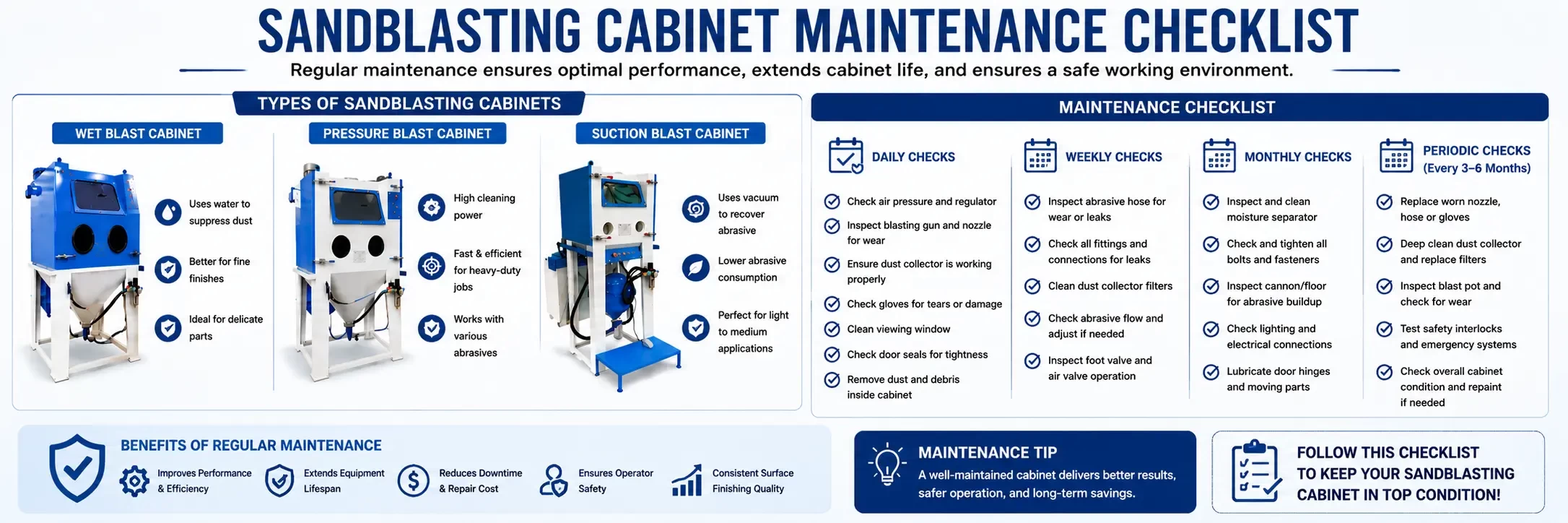
Daily Sand Blasting Cabinet Maintenance Checklist
Daily checks are the foundation of reliable cabinet performance. These are the basic inspections and sand blasting cabinet cleaning tasks that should be carried out before, during, or after each working shift.
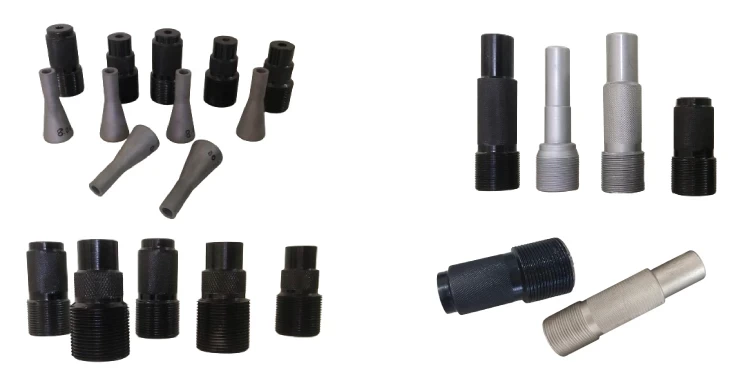
Check the Blast Nozzle for Wear
The nozzle is one of the fastest-wearing parts in a blasting cabinet. As abrasive flows through it, the internal opening gradually enlarges. When this happens, blasting efficiency drops, air consumption may increase, and the abrasive pattern becomes less focused.
What to inspect:
- Visible wear on the blasting nozzle opening
- Reduced blasting intensity
- Uneven abrasive spray pattern
- Cracks or damage around the sand blasting nozzle body
A worn sand blast nozzle should be replaced before it causes excessive air use or poor surface preparation quality.
Inspect the Blast Gun and Media Flow
The blast gun should deliver a steady and uninterrupted abrasive stream. If the flow is pulsing, weak, or inconsistent, the issue may be related to media contamination, hose blockage, moisture, air pressure problems, or internal wear in the gun assembly.
Daily checkpoints:
- Smooth abrasive flow during blasting
- No blockage in the gun body
- Secure fittings and connections
- Proper trigger or foot-pedal response if fitted
Any interruption in abrasive media flow should be investigated immediately because it affects finish quality and production speed.
Examine Cabinet Gloves for Cuts or Wear
Gloves are essential for safe cabinet operation. Because they are constantly exposed to abrasive media rebound and repeated movement, they can wear faster than many operators expect.
Inspect for:
- Small holes, cuts, or thinning material
- Loose glove mounting rings
- Stiffness or cracking from age
- Loss of flexibility that makes blasting uncomfortable
Damaged gloves should be replaced immediately to avoid operator exposure and reduced control during blasting.
Clean and Check the Viewing Window
Clear visibility is critical for accurate blasting. Dust buildup, scratched protective films, and worn glass reduce the operator’s ability to see the workpiece properly.
Daily tasks:
- Wipe the viewing area and remove settled dust
- Check for scratches or cloudy protective film
- Replace worn window protectors if visibility is poor
- Confirm the window seal is intact
Good visibility improves blasting speed, finish consistency, and operator comfort.
Empty and Inspect the Dust Collection Unit
The dust collector is one of the most important parts of a cabinet blasting system. If it is overloaded, blocked, or underperforming, visibility drops, and dust starts circulating inside the cabinet.
Daily dust collector checks:
- Empty the dust collection bin if required
- Look for reduced suction or unusual airflow
- Check for obvious filter blockage
- Confirm dust is being extracted during blasting
- Inspect hoses or ducting for leaks if accessible
Ignoring the dust collector is one of the most common causes of poor cabinet performance.
Remove Oversized Debris and Contaminants from the Cabinet Floor
Broken parts, heavy rust flakes, paint chips, metal fragments, and large debris can interfere with abrasive recovery and damage internal components if allowed to accumulate.
Daily sand blasting cabinet cleaning steps:
- Remove oversized contamination from the cabinet base
- Check the media hopper area for obstruction
- Keep the work great, clean, and stable
- Prevent scrap pieces from blocking the recovery section
A cleaner cabinet improves media flow and reduces unnecessary wear.
Check Air Pressure and Air Supply Condition
Abrasive blasting depends on stable compressed air. If pressure fluctuates or the air contains moisture, blasting quality suffers immediately.
Daily sand blasting cabinet inspection points:
- Confirm operating pressure matches the application
- Check the regulator setting if fitted
- Drain moisture from the air line or separator if required
- Listen for air leaks around fittings, sand blasting hose coupling, and gun connections
Moisture in the air supply can contaminate abrasive media, cause clogging, and reduce blasting consistency.
Weekly Sand Blasting Cabinet Maintenance Checklist
Weekly maintenance goes beyond quick inspections and focuses on wear, cleaning, and performance stability.
Inspect the Abrasive Media Condition
Reusable abrasive media does not stay effective forever. Over time, it breaks down, becomes dusty, mixes with contamination, and loses cutting performance.
Weekly checks should include:
- Whether the media is excessively dusty or broken down
- Whether blasting speed has slowed noticeably
- Whether foreign contamination is mixed into the media
- Whether the media size is still suitable for the application
If the abrasive is heavily contaminated or worn out, it should be replaced or topped up with fresh media as needed.
Check the Cabinet Interior for Wear
The internal walls of a blasting cabinet are exposed to continuous abrasive rebound. Some cabinets include wear liners, while others rely on the cabinet body and replaceable protection in high-impact areas.
Inspect for:
- Thinning metal or damaged liners
- Excessive wear near the blasting zone
- Exposed sharp edges
- Damage around corners, sand blasting hopper sections, or internal joints
Catching wear early can prevent more expensive cabinet body repairs later.
Inspect Door Seals and Cabinet Leaks
Cabinet doors, access panels, glove ports, and viewing window edges should remain sealed during blasting. If seals wear out, dust can leak into the workshop, and suction performance may be affected.
Weekly inspection:
- Check door gasket condition
- Look for dust escaping around the cabinet edges
- Inspect glove port sealing points
- Ensure latches close the cabinet firmly
Replacing worn seals improves dust control and keeps the blasting chamber more efficient.
Clean or Service Dust Collector Filters as Required
Depending on the type of dust collector, filter maintenance may be needed weekly or according to the machine’s workload. Even if the collector still appears to be running, partially clogged filters can reduce airflow and visibility.
Weekly filter tasks:
- Clean the filter according to the machine design
- Inspect for damage or excessive loading
- Check whether suction performance has dropped
- Replace filters if they can no longer be cleaned effectively
Better filter condition means better visibility, cleaner abrasive, and more stable blasting performance.
Inspect Hoses for Wear and Soft Spots
Blast hoses and air hoses are constantly exposed to pressure, vibration, and abrasive movement. Even if they appear fine from the outside, they should be checked regularly.
Weekly hose inspection:
- Surface cracking or abrasion
- Loose clamps or couplings
- Soft sections indicating internal wear
- Leaks at fittings or joints
A damaged hose can cause pressure loss, poor blasting efficiency, or unexpected failure during operation.
Monthly Sand Blasting Cabinet Maintenance Checklist
Monthly maintenance should focus on deeper sand blasting cabinet inspection, adjustment, and performance review. This is where preventive maintenance creates long-term value.
Check the Foot Pedal, Trigger, and Control System
If the cabinet uses a foot pedal or control valve to activate blasting, that system should be checked for smooth and safe operation.
Monthly control checks:
- Pedal returns correctly after use
- No sticking or delayed response
- Valves open and close properly
- Trigger mechanisms remain reliable under repeated use
Faulty controls affect both productivity and operator safety.
Inspect Lighting and Electrical Components
Good lighting is essential for surface preparation work, especially when blasting detailed parts or inspecting finish quality inside the cabinet.
Monthly lighting checks:
- Replace dim or failed internal lights
- Inspect protective covers on cabinet lights
- Check electrical wiring for damage
- Ensure visibility remains consistent across the work area
Poor lighting slows the operator and increases the chance of missed spots or uneven blasting.
For more info about the grit blasting machine, visit our webpage.
Review Abrasive Consumption and Machine Performance
A monthly performance review can reveal hidden maintenance issues before they become serious. If abrasive use has increased or blasting time per part has gone up, there may be wear or dust-control problems affecting the process.
Questions to review:
- Is the cabinet using more abrasive material than before?
- Has blasting speed become slower?
- Are operators reporting poor visibility?
- Is the finish quality less consistent than earlier?
- Has dust leakage increased around the cabinet?
These trends often point to nozzle wear, media breakdown, poor dust extraction, or air supply issues.
Tighten Hardware and Check Structural Stability
Cabinet doors, hinges, latches, grate supports, and mounting hardware can loosen over time due to vibration and repeated use.
Monthly hardware checks:
- Tighten loose fasteners
- Inspect hinges and latch alignment
- Confirm the work grate is secure
- Check cabinet frame stability
- Look for unusual vibration during operation
A stable cabinet is easier to operate and less likely to develop alignment or sealing problems.
Best Practices for Long-Term Sand Blasting Cabinet Care
A maintenance checklist works best when combined with good operating habits. Small daily habits often make the biggest difference to cabinet life and blasting quality.
Best practices include:
- Use clean, dry compressed air
- Match the abrasive media to the application
- Avoid overfilling the media hopper
- Replace nozzles before they become badly worn
- Do not continue blasting if visibility is poor
- Train operators to report changes in blasting performance early
- Keep spare gloves, nozzles, filters, and window protectors available
- Record maintenance activity for frequently used cabinets
A simple maintenance log can help identify recurring problems and make service planning easier.
For more info about the sand blasting machine spare parts, visit our webpage.
Sandblasting Cabinet Maintenance Checklist Summary by Frequency
Daily
- Check nozzle wear
- Inspect the blast gun performance
- Examine gloves
- Clean viewing window
- Empty or inspect the dust collector
- Remove cabinet debris
- Check air pressure and moisture
Weekly
- Inspect abrasive condition
- Check the cabinet interior wear
- Inspect door seals and leaks
- Clean or inspect dust collector filters
- Check sand blasting hoses and couplings
Monthly
- Test control systems and the foot pedal
- Inspect lighting and electrical components
- Review abrasive usage and blasting efficiency
- Tighten hardware and check cabinet stability
A sand blasting cabinet performs best when maintenance is treated as part of the blasting process, not as a separate repair activity done only after a problem appears. Regular sand blasting cabinet inspection of the nozzle, blast gun, gloves, viewing window, dust collector, abrasive media, hoses, seals, and controls helps maintain stronger blasting performance, cleaner visibility, lower abrasive waste, and better surface preparation quality. We are one of the best sand blasting cabinet manufacturers in India, and also supply all types of abrasive blast cabinets, such as suction blaster, wet blasting cabinet, pressure blasting cabinet, benchtop sand blasting cabinet, manual sand blasting cabinet, etc.
For workshops and industrial users alike, a maintenance checklist is one of the simplest ways to protect machine life, reduce operating cost, and avoid unnecessary downtime. Whether the cabinet is used occasionally for repair work or continuously in production, preventive maintenance keeps the system reliable, efficient, and ready for consistent blasting performance day after day.