Abrasive Media for Blasting Cabinets
Choosing the right abrasive media is one of the most important decisions in any cabinet blasting operation. Even the best sand blasting cabinet cannot deliver consistent results if the blasting material is not matched to the workpiece, surface condition, and finishing objective. In industrial manufacturing, repair workshops, fabrication units, foundries, and restoration businesses, abrasive media directly affect cleaning speed, surface profile, finish quality, dust generation, media consumption, and equipment wear. This guide explains the top abrasive media for sand blasting cabinets, where each one performs best, and how to choose the right blasting material for your application.
How to Choose the Right Blasting Media for Better Surface Finishing
That is why understanding abrasive media selection is essential for anyone using a sand blasting cabinet. Whether the goal is rust removal, paint stripping, deburring, matte finishing, coating preparation, or delicate cleaning, the abrasive blasting media must be selected carefully to achieve the right balance of performance, cost, and surface protection.
Why Abrasive Media Selection Matters in Blasting Cabinets
In a sand blasting cabinet, the abrasive media does the actual surface treatment work. The cabinet contains the process, the blast gun directs the stream, and the air system provides the force, but the media determines how aggressively the surface is cleaned and what finish is produced. The wrong abrasive can create several problems:
- Surface damage on delicate components
- Slow cleaning speed on heavily rusted parts
- Excessive dust generation
- High media consumption
- Uneven surface finish
- Poor coating adhesion
- Increased sand blasting nozzle and cabinet wear
- Unnecessary operating cost
The right abrasive media improves process efficiency, helps achieve the required finish, and supports repeatable results in industrial blasting applications.
What to Consider Before Choosing Abrasive Media
Before selecting a blasting media for a sand blasting cabinet, it is important to evaluate the actual blasting requirement. Different abrasives are designed for different cleaning intensities and surface finishes. Key selection factors include:
Material of the Workpiece
The hardness and sensitivity of the base material matter. Mild steel, stainless steel, cast iron, aluminium, brass, copper, and soft alloys all respond differently to abrasive impact.
- Surface Condition: A lightly oxidized part may require only a gentle media, while thick rust, scale, or old paint may need a more aggressive abrasive.
- Desired Surface Finish: Some jobs need a rough anchor profile for coating adhesion, while others require a satin, matte, or polished appearance.
- Reusability of the Abrasive Blasting Media: In cabinet blasting, reusable abrasives often reduce long-term cost. However, durability varies significantly by media type.
- Dust Generation: Certain abrasives break down faster and create more dust, which can affect visibility and dust collector performance.
- Equipment Compatibility: Not every cabinet is ideal for every abrasive. Heavier media, such as steel grit or steel shot, may require a stronger recovery system and wear-resistant cabinet design.
Once these factors are clear, it becomes easier to choose the right blasting media.
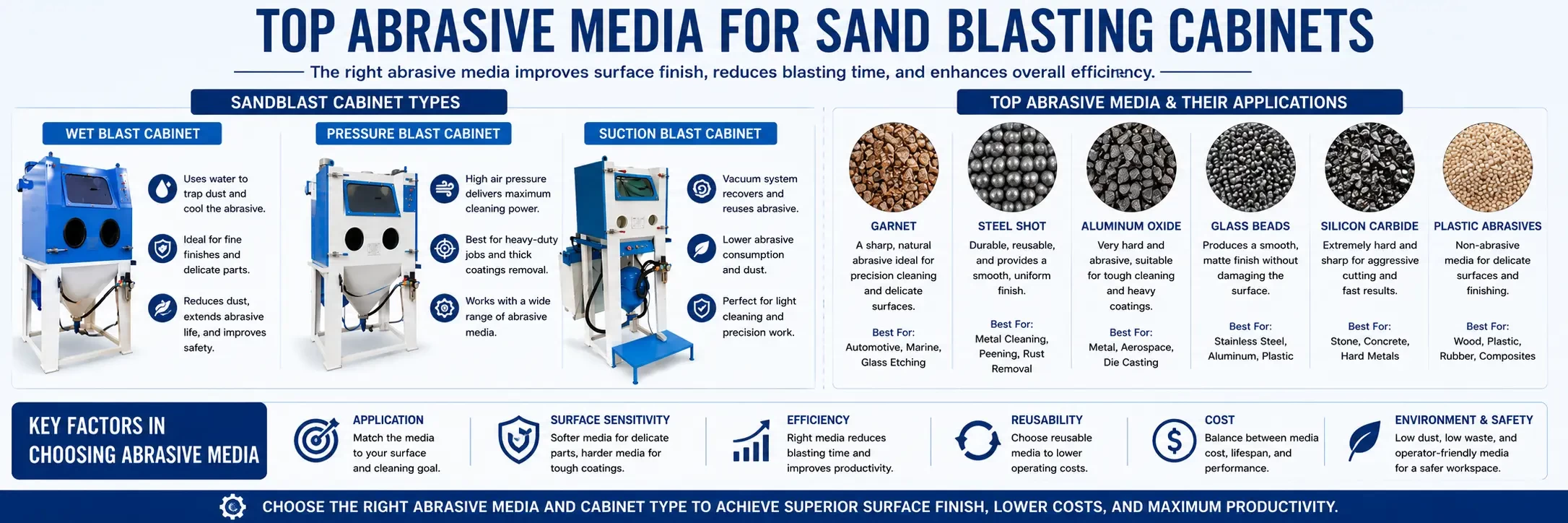
Aluminium Oxide
Aluminium Oxide is a Popular Choice for Aggressive Cleaning. Aluminium oxide is one of the most widely used abrasive media for sand blasting cabinets because it combines hardness, cutting ability, and reusability. It is a sharp, durable abrasive commonly used when strong cleaning action and surface profiling are required.
Best uses of aluminium oxide
- Rust removal on steel parts
- Surface preparation before powder coating or painting
- Deburring machined components
- Cleaning fabricated parts
- Removing oxidation and old coatings
- Preparing surfaces for bonding or thermal spraying
Why Manufacturers Prefer Aluminium Oxide
Aluminium oxide cuts quickly and lasts longer than many softer media, making it suitable for industrial blasting applications where productivity matters. It is especially useful for pressure blasting cabinets and production environments where repeated media reuse is important.
Glass Beads
Glass beads are ideal for smooth, clean, and satin finishes. Glass beads are abrasive media among the most common media used when the objective is cleaning without heavy surface removal. Unlike sharp cutting abrasives, glass beads peen the surface rather than aggressively cutting into it. This makes them suitable for applications where a smoother and more cosmetic finish is required.
Best Uses of Glass Beads
- Cleaning stainless steel and aluminium parts
- Cosmetic finishing of machine components
- Removing light oxidation or surface contamination
- Producing satin or matte finishes
- Cleaning molds, dies, and precision tools
- Restoring automotive and motorcycle parts
Why are Glass Beads Popular in Abrasive Blast Cabinets
Glass bead blasting is often chosen for enclosed cabinet systems because the media is reusable and provides a more controlled finish. It is especially useful when the operator wants to clean the part while preserving dimensional integrity.
Steel Grit
Steel grit is a powerful metallic abrasive used for aggressive cleaning and heavy surface preparation. It is angular in shape, which allows it to cut into the surface and remove tough contamination efficiently. It is commonly used in industrial applications where durability and high-impact blasting are required.
Best Uses of Steel Grit
- Heavy rust and scale removal
- Surface preparation of fabricated steel
- Cleaning castings and forgings
- Removing hard industrial coatings
- Creating an anchor profile before heavy-duty coating systems
Advantages of Steel Grit
Steel grit is highly durable and reusable, which makes it attractive for heavy industrial operations. It delivers strong cutting action and can be cost-effective over time when used in systems designed to recover and recycle metallic abrasives efficiently.
Important consideration:
Because steel grit is heavier than many other blasting media, the blasting cabinet must be capable of handling metallic abrasives. The recovery system, blast hose, and cabinet lining should be designed accordingly.
Steel Shot
Steel shot is different from steel grit in both shape and effect. While steel grit is angular and cuts the surface, steel shot is rounded and produces a peening action. It is commonly used when the goal is cleaning, strengthening, or smoothing the surface rather than cutting deeply. Steel shot abrasive media is best for peening and smoother surface treatment.
Best Uses of Steel Shot
- Shot peening machine applications
- Surface cleaning without sharp etching
- Improving fatigue resistance on certain components
- Cleaning cast or forged metal parts
- Smoothing rough surfaces after initial processing
Benefits of Steel Shot
Steel shot is durable, reusable, and useful in applications where a more rounded impact is desirable. It is often selected for controlled industrial finishing and peening operations.
Garnet Sand
Garnet sand is a natural mineral abrasive known for its hardness, relatively low dust generation, and versatility. It offers a useful balance between cutting efficiency and surface finish, which makes it suitable for a wide range of cabinet blasting jobs.
Best Uses of Garnet Sand
- Surface preparation before coating
- Rust removal and cleaning
- Fabrication part finishing
- General-purpose industrial blasting
- Applications requiring lower free silica concerns than traditional sand
Why garnet sand is a strong option
Garnet sand is valued for its good cutting performance and cleaner blasting characteristics. It is often used when operators want effective cleaning without the extremely aggressive action of some harder synthetic abrasives.
Silicon Carbide
Silicon carbide abrasive is one of the hardest blasting abrasives used in cabinet systems. It is sharp, fast-cutting, and highly effective on difficult surfaces. This media is often chosen for specialized applications where high hardness is essential. Silicon carbide is an extremely hard abrasive media for tough jobs.
Best Uses of Silicon Carbide
- Very hard surface cleaning
- Rapid coating or contamination removal
- Stone, glass, or ceramic surface work
- Specialized industrial finishing applications
Why it stands out:
Silicon carbide abrasive cuts quickly and performs well where other abrasives may be too slow. It is suitable for demanding blasting jobs that require strong abrasive action.
Plastic Media
Plastic blasting media is used when the surface must be cleaned without damaging the underlying material. It is softer than mineral or metallic abrasives and is often used where preservation of substrate integrity is critical. Plastic abrasive media is safer for delicate Surfaces.
Best Uses of Plastic Media
- Cleaning delicate aluminium parts
- Removing coatings from soft metals
- Aerospace components
- Automotive restoration work
- Surface cleaning where dimensional change must be minimized
Why manufacturers use Platic Media
Plastic media is useful when conventional abrasives are too harsh. It allows coating removal and light cleaning while reducing the risk of deep etching or warping soft surfaces.
Ceramic Blasting Media
Ceramic blasting media is often used where long life, consistent shape, and refined finishing performance are important. It can provide a smoother finish while still offering better durability than some lighter abrasives. Ceramic media is a durable option for precision finishing.
Best Uses of Ceramic Media
- Precision finishing
- Surface smoothing
- Cleaning components with controlled texture requirements
- High-end industrial finishing applications
Why is it useful:
Ceramic blasting media is often chosen for specialized cabinet blasting processes where media consistency and finish quality are critical. It can be a good option for manufacturers that need repeatable cosmetic or semi-polished finishes.
How to Match Abrasive Media to the Blasting Application
Choosing the right abrasive becomes easier when you match the media to the actual job requirement rather than selecting based only on popularity.
- For heavy rust, scale, and industrial coating removal
Choose aggressive media such as brown aluminium oxide, steel grit, or silicon carbide, depending on the hardness of the workpiece and the required cleaning speed.
- For smooth cleaning and cosmetic finishing
Glass beads or ceramic media are often better choices when appearance and surface smoothness matter more than deep cutting action.
- For soft metals and delicate parts
Plastic media or fine glass beads can help clean without damaging the base material.
- For peening or surface strengthening
Steel shot is commonly preferred where rounded impact and surface compression are beneficial.
- For general industrial cleaning
Garnet offers a practical middle ground for many fabrication and maintenance applications.
Abrasive Media Size Also Matters
The type of abrasive is only part of the decision. Grain size also influences the blasting result.
Coarser abrasive media generally provide:
- Faster cleaning on heavy contamination
- More aggressive surface profile
- Higher material removal rate
Finer abrasive media generally provide:
- Smoother surface finish
- Better control of delicate parts
- Lower risk of excessive surface damage
A cabinet blasting process works best when both media type and media size are selected according to the workpiece and finish requirements.
For more info about Best Sandblasting Cabinet Manufacturer, Visit Our Webpage.
Best Practices for Using Abrasive Media in Sand Blasting Cabinets
To get better performance from abrasive media, follow a few practical rules:
- Keep the abrasive media dry and clean: Moisture or contamination can cause clogging, inconsistent blasting, and poor finish quality.
- Do not mix incompatible media: Mixing different abrasive types can create inconsistent results and reduce media recovery efficiency.
- Replace broken-down media: Worn media loses cutting ability and increases dust generation.
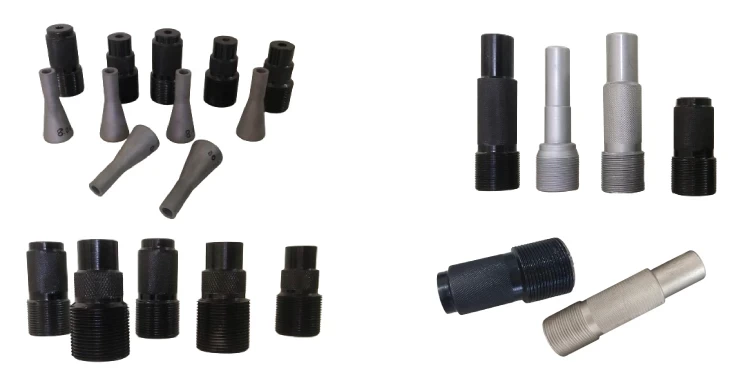
- Match nozzle size to the media: The wrong nozzle size can reduce blasting efficiency and increase wear.
- Maintain the dust collector: A strong dust collection system helps remove broken particles and keeps reusable media in better condition.
- Inspect cabinet wear components regularly: Aggressive media can wear out sand blasting hoses, sand blasting nozzles, liners, and gloves over time.
Selecting the top abrasive media for blasting cabinets is just as important as choosing the cabinet itself. Each blasting media has its own strengths, limitations, finish characteristics, and cost implications. Aluminium oxide is excellent for aggressive cleaning, glass beads are ideal for satin finishing, steel grit works well for heavy industrial preparation, steel shot supports peening and smoother impact, garnet offers balanced performance, silicon carbide handles very hard jobs, plastic media protects delicate surfaces, and ceramic media supports precision finishing.
The best abrasive media depends on your workpiece material, contamination level, desired finish, production needs, and equipment design. By matching the abrasive to the actual blasting objective, manufacturers and workshop operators can improve cleaning speed, reduce media waste, protect sensitive components, and achieve more consistent results across every blasting cycle. A smart media choice ultimately improves both surface quality and long-term blasting efficiency.